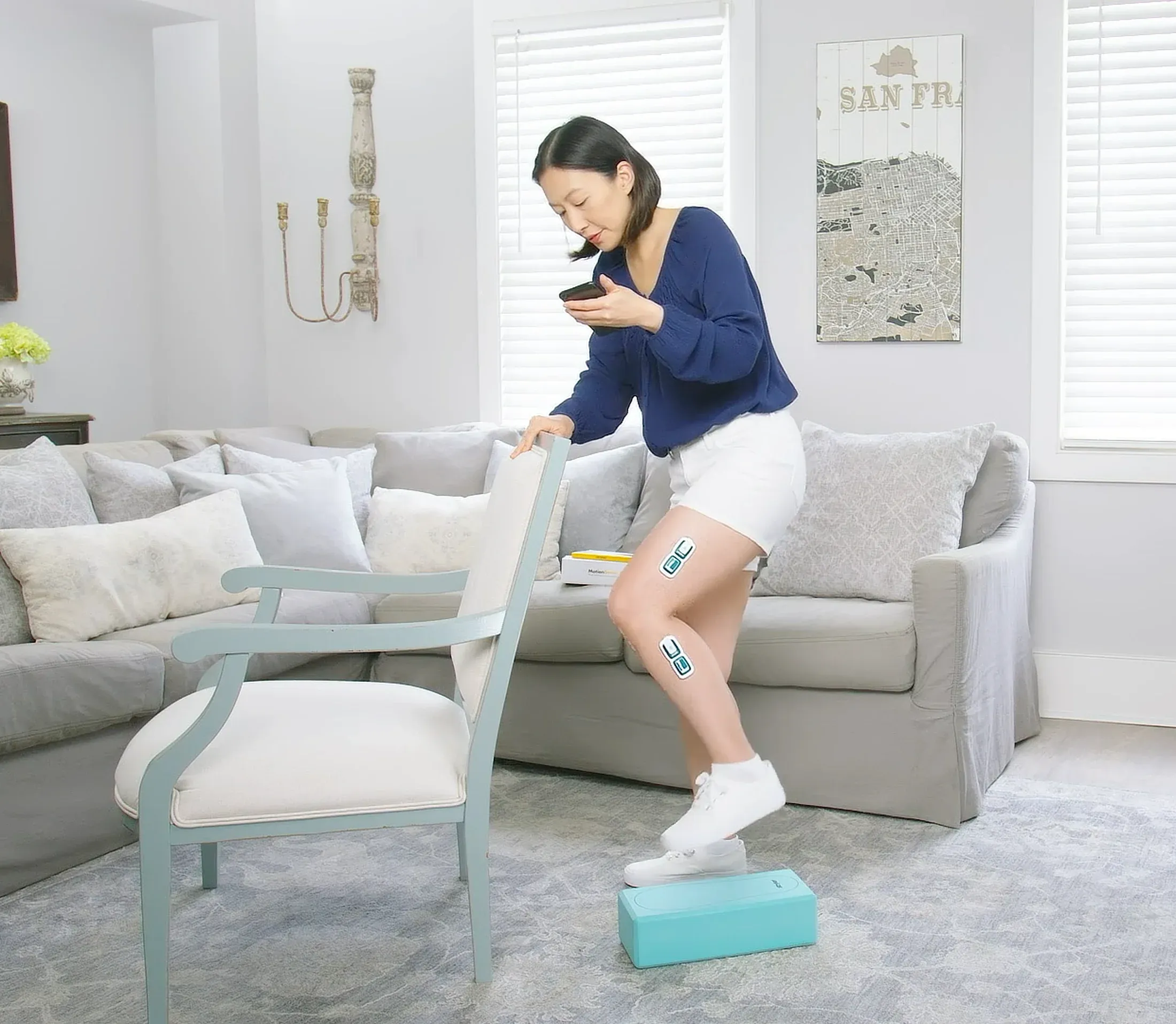

A patient doing a step exercise at home while following the MotionSense app

Where Innovation Meets Recovery

MotionSense

Industry

Healthcare

Technology

Kotlin, Bluetooth LE, Figma

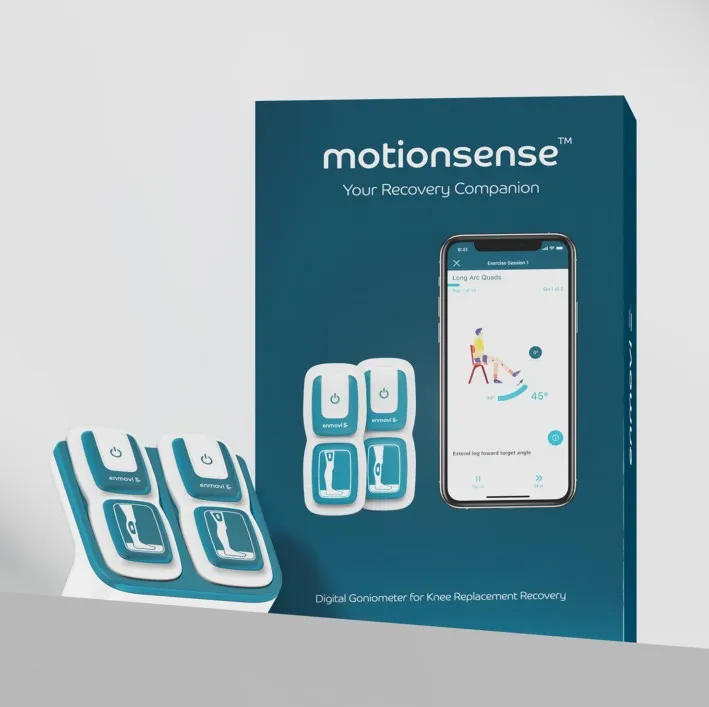
The MotionSense box with four wearable sensors and the companion app on a phone
MotionSense (MS) is a connected wearable and app designed to help motivate patients and support Healthcare Professionals (HCPs) in recovery from total knee replacement surgery (TKR).

Services

  • Product Research
  • UI/UX
  • Product Management
  • Motion Design
  • Mobile App Development

Background

EnMovi is a spin-out company from OrthoSensor and McLaren Applied, formed to advance MotionSense wearable technology.

The venture brought together OrthoSensor’s experience in sensor-assisted orthopedics and McLaren Applied’s expertise in data, software, and advanced engineering. MotionSense had the potential to give patients greater confidence during recovery while providing care teams with objective movement data. To realize that potential, EnMovi needed a mobile experience that made complex information easy to understand and use at home. That is where Cruxlab came in.

We reached out to them [Cruxlab] again because they were very quick and agile and because they were available to take on the work.

Matthias Verstraete, Enmovi

Challenge

EnMovi faced a tight deadline ahead of a major orthopedic tradeshow and upcoming clinical testing. Missing it meant losing a key opportunity to showcase the technology, gather feedback, and maintain momentum.

Immediate objective: functional application demonstrating the MotionSense capability on time for the event.

The app also had to work for adults aged 50–65 with varying levels of tech confidence, often shortly after surgery when pain and limited mobility could make simple tasks difficult.

With clinician-guided activities moving into the home, sensor setup, calibration, exercise selection, and movement tracking had to be exceptionally simple and clear.

Venn diagram of the project constraints: hard deadlines, intuitive UX for older age groups, and a wearable medical device

Our approach & solution

Understanding the product first

We started with a four-week [discovery phase] to understand MotionSense beyond the interface — its users, clinical context, wearable sensors, and recovery process. Working directly with development hardware helped our designers and engineers see how the technology behaved in real-world conditions and shape the experience around it.

Making recovery easier to follow

A major focus was turning complex sensor-based exercises into a clear at-home experience. Our work included:

  • Customer onboarding and device calibration
  • Bluetooth LE integration with wearable sensors
  • User testing of instructions and interaction patterns
  • Motion design for direction, timing, progress, and completion
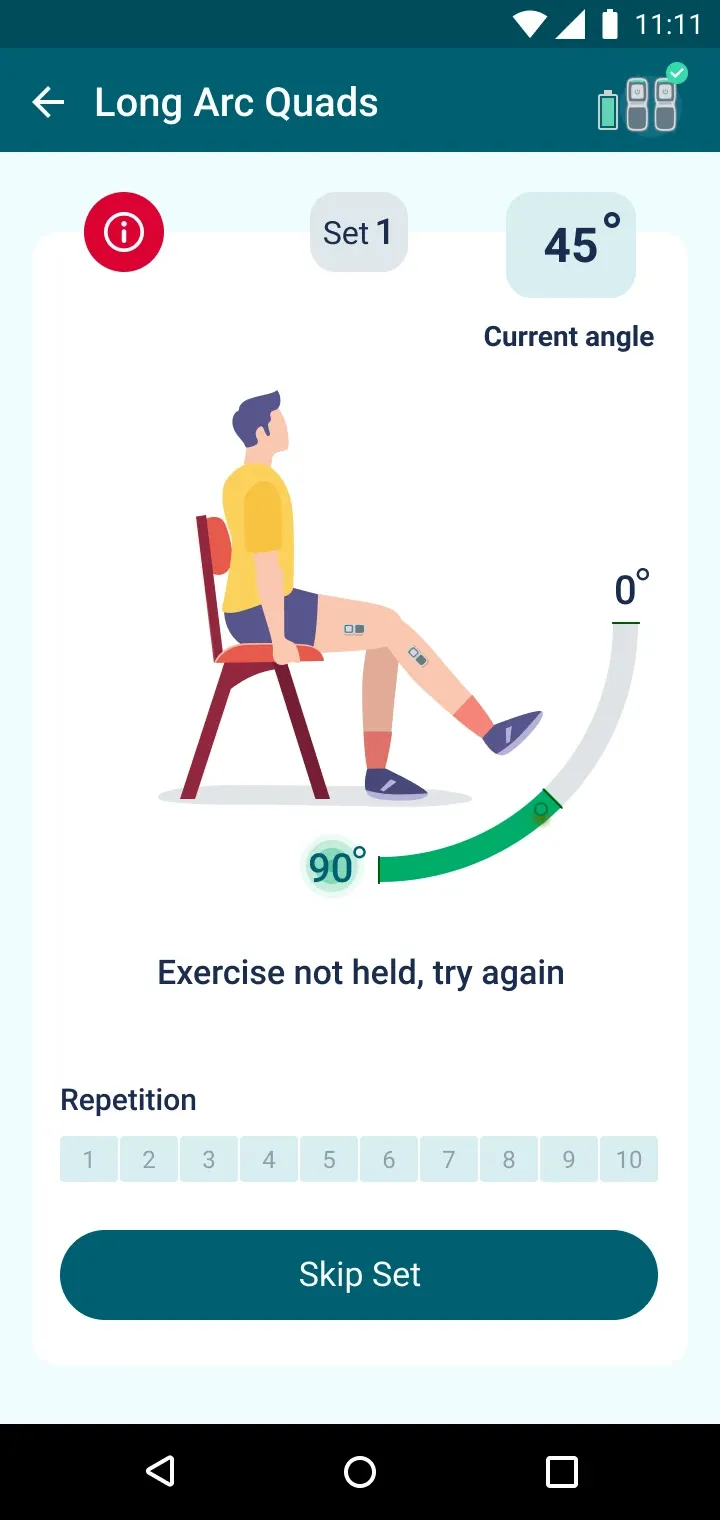
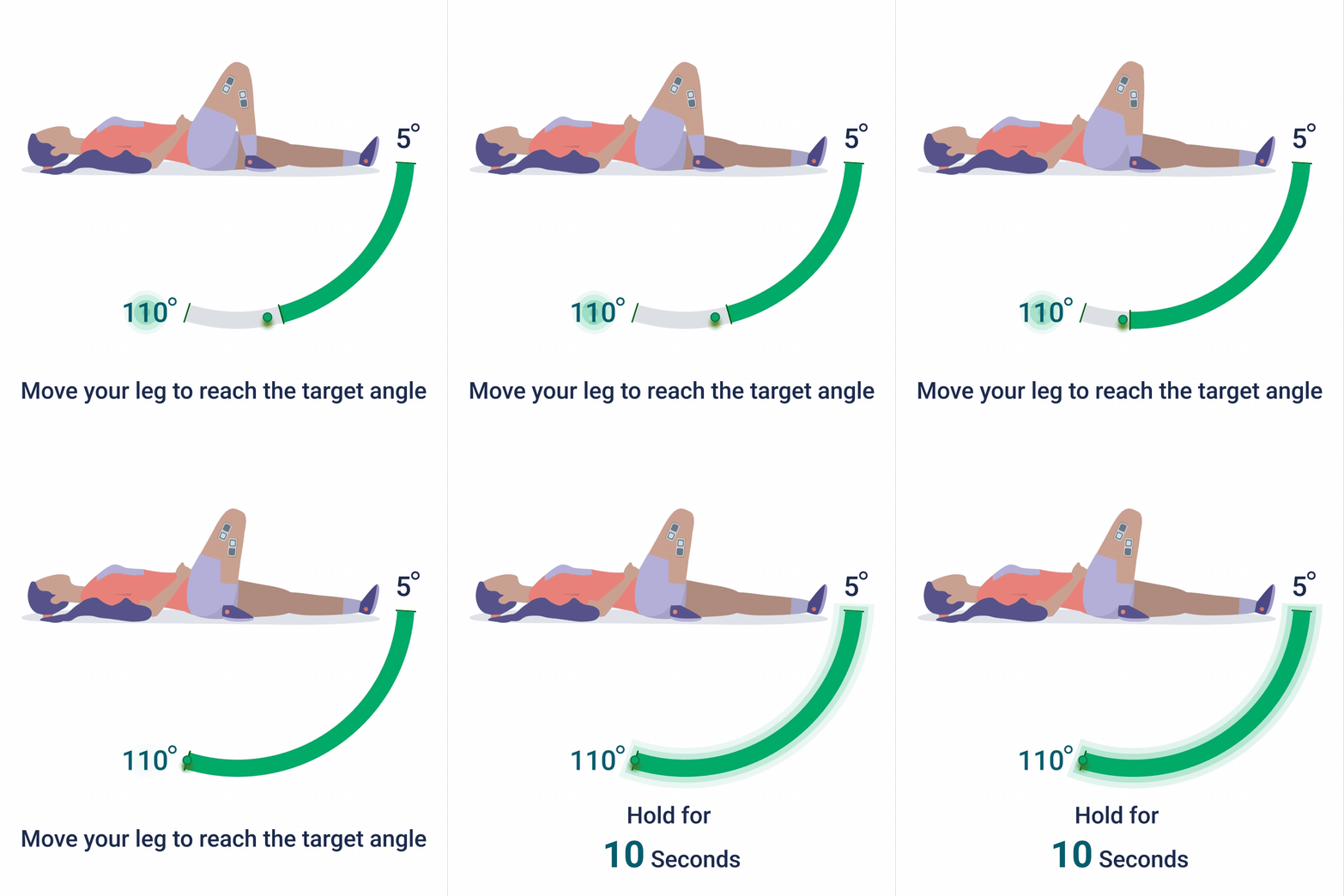
  • An animated avatar synchronized with patient movement for immediate visual feedback

The result helped patients understand both what to do and how well they were doing it, without relying on a clinician being physically present.

The team took great ownership of the project and exhibited an in-depth understanding of how the technology should interact with the wearable physical therapy device.

Matthias Verstraete, Enmovi
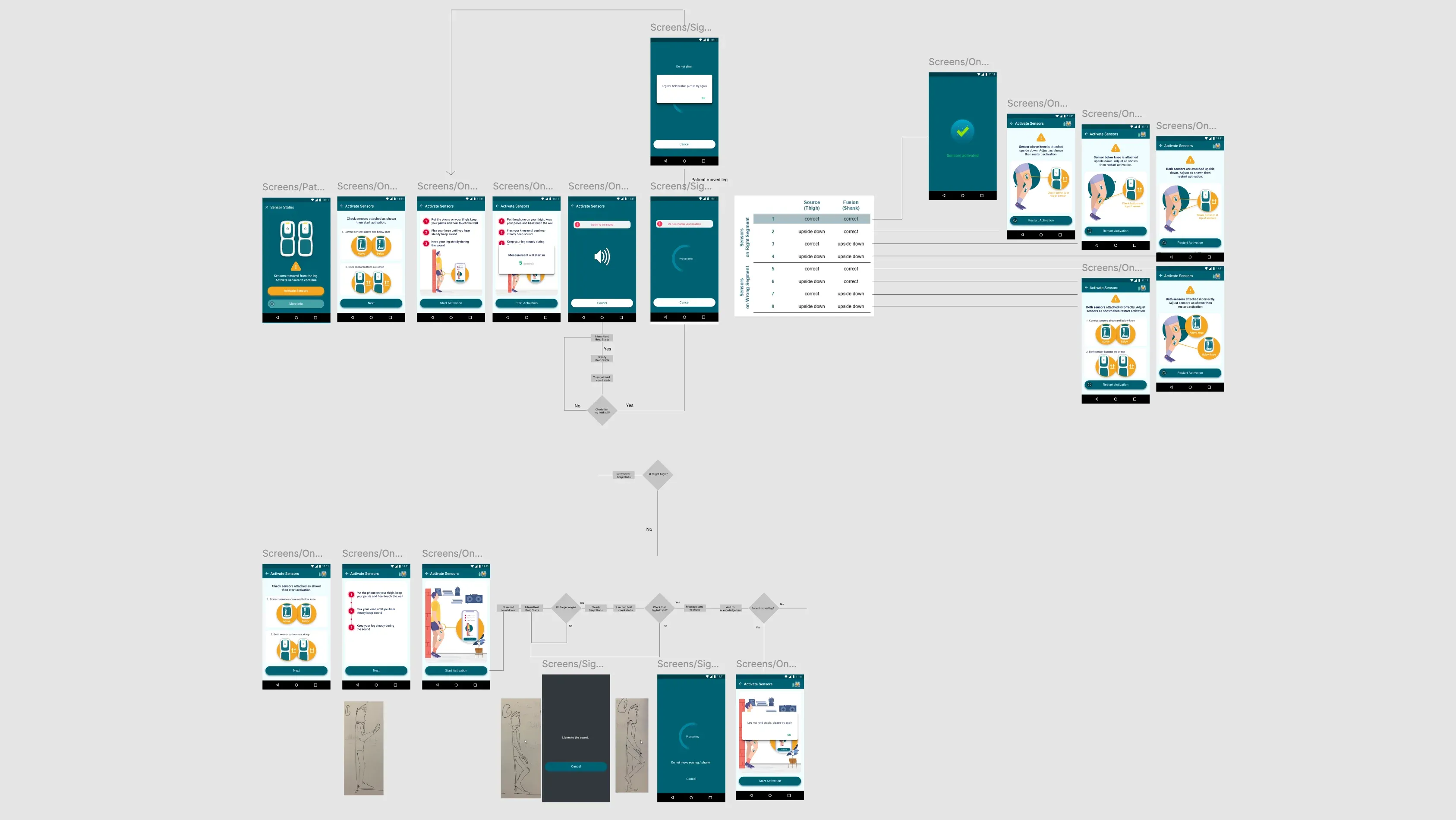
A flow map of MotionSense app screens with user-testing annotations
MotionSense exercise screen with the animated avatar
Animation of the avatar guiding a knee exercise
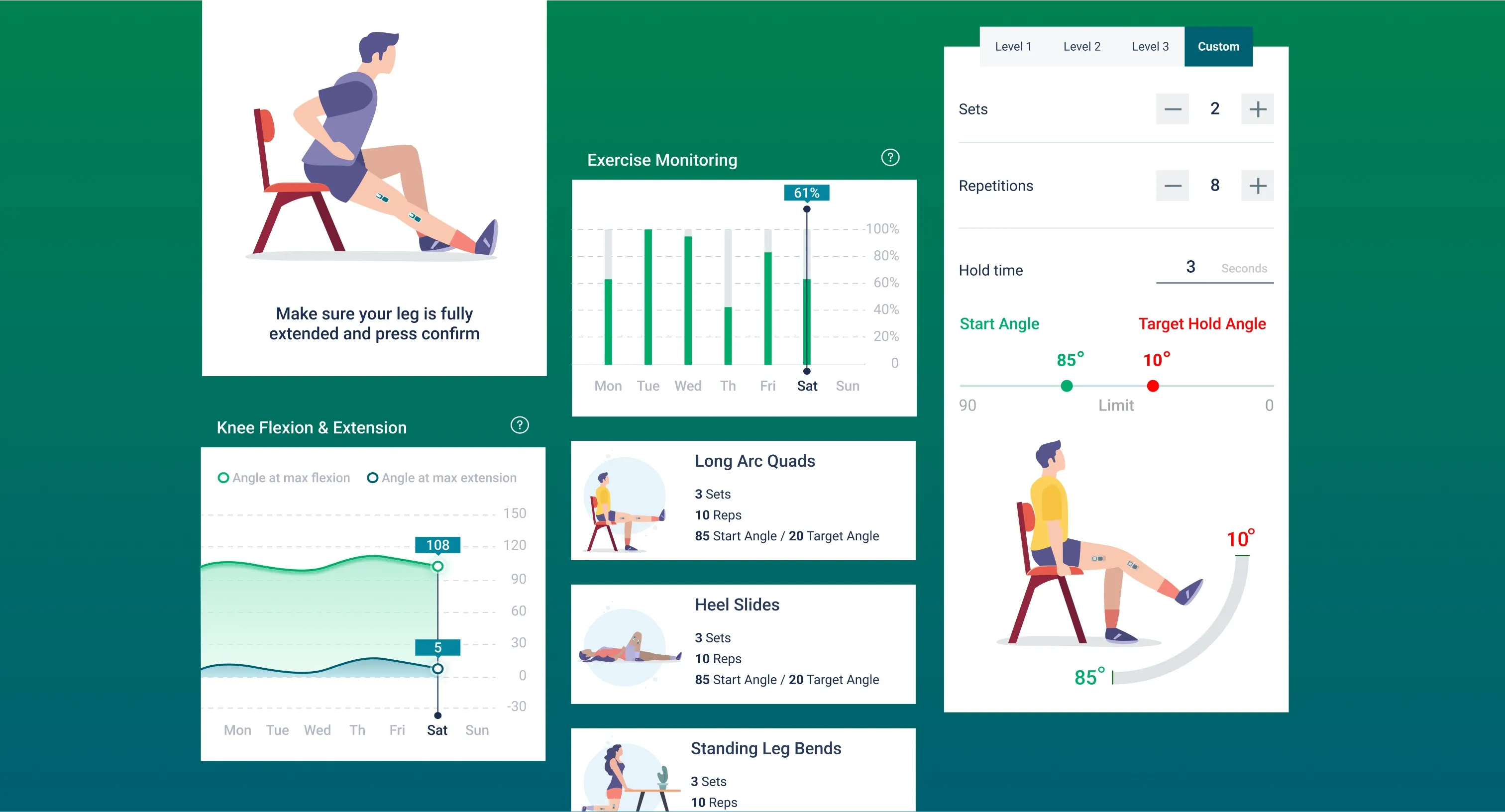
A collage of MotionSense app screens: exercise monitoring, knee flexion charts, and exercise settings

Moving fast as one product team

We worked in focused sprints with close collaboration between our UX, engineering, and EnMovi’s clinical and technical teams. Strong [product management] helped us identify gaps, improve the experience beyond individual requirements, and begin rolling out the first versions within two weeks.

Outcomes

Cruxlab delivered a full-featured application connecting patients with the MotionSense wearable throughout knee replacement recovery. The experience combined device connectivity and calibration with movement visualization, exercise guidance, data collection, and patient feedback.

The application was later used with the wearable device in a clinical study, where patient feedback was highly positive. Following a series of successful milestones, EnMovi was acquired by Stryker, bringing MotionSense and its supporting digital platform into Stryker’s broader orthopedic ecosystem.

“We were really pleased with Cruxlab’s services because they took us a step further in understanding the system. They performed excellently on the project, delivering on time and within budget. The way they took ownership of the project really stood out to us. ”

Matthias Verstraete
Matthias VerstraetePhD, Director of Clinical Data Science and AI @ Enmovi, part of Stryker